What Regulators are Actually Flagging Now
|
|
|
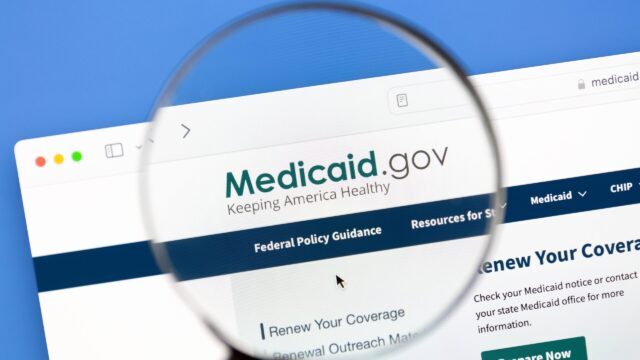
After what happened in Minnesota, we said other states would follow. They are. As Medicaid budgets come under pressure, states like Florida, Massachusetts, Louisiana, and Arizona have all signalled renewed action against Medicaid fraud, with New York among them. Investigators are looking for the same things everywhere: - Trips billed that never happened
- Inflated mileage to increase reimbursement
- Unlicensed or uncertified drivers
- Claims submitted without proper documentation
- Mismatches between trip records and actual activity
None of this was sophisticated. The fraud didn't succeed because the schemes were clever. It succeeded because the systems were loose enough to let it happen at scale. Because NEMT is federally funded through Medicaid, all providers, not just offenders, are now under increased scrutiny, with the category increasingly being treated as a high-priority audit classification.
|
|
What They’re Looking For NowThink of it as 4 core checks: 1. Did the trip actually happen? - GPS / route data
- Pickup and drop-off timestamps
- Matching trip logs
2. Was the driver valid? - Proper licensing (DMV + TLC where required)
- Active credentials, not expired
- Correctly assigned to that trip
3. Was the vehicle compliant? - Registered and insured
- Proper certification (TLC if applicable)
4. Does the claim match the trip? - Mileage aligns with actual route
- No duplicate or overlapping trips
- Documentation is complete
|
|
How Enforcement Is Shifting
The way audits are being conducted is changing. Expect: - GPS-to-billing data matching - your route data is being cross-referenced against what you billed
- Pre-payment reviews - claims are being checked before payment, not after
- Unannounced audits - and more frequently
- Less tolerance - for missing information, manual corrections after the fact, or inconsistent records
- Faster action - non-compliant providers are being removed from networks sooner, not warned
It's no longer about whether you can explain a discrepancy. It's about whether you can prove compliance instantly.
|
|
What Happens If You Don’t Meet RequirementsThis is where operators underestimate risk. Compliance failures cascade: a missed background check can trigger broker termination, which triggers insurance non-renewal. At the end of that chain? Medicaid exclusion. That means losing the revenue stream entirely, often permanently. And brokers share termination data, so getting flagged by one triggers review across all of them.
Even before it gets that far: And in the worst cases, criminal charges.
|
|
If You're Ready, You're Already Ahead.
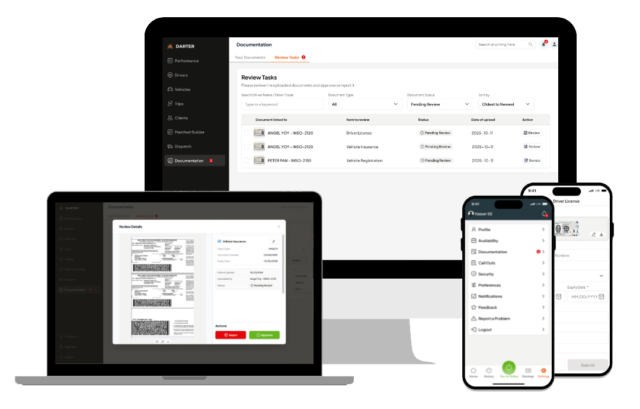
The 4 checks above are what investigators look for. This is what your operation needs to have in place to pass them: Trips: - A system that auto-logs GPS, timestamps, and appointment match for every trip
- No manual entry or after-the-fact corrections
Drivers: - Automated credential tracking that flags expirations before they lapse
- Every driver linked to their assigned trips in the system, not on a spreadsheet
Vehicles: - Registration, insurance, and certifications tracked centrally with alerts
- Inspection records accessible on demand, not filed away somewhere
Billing: - Route data that feeds directly into claims so mileage can't drift from actuals
- No gaps between what was driven and what was billed
Documentation: - Everything lives in one place
- Retrievable in minutes, not hours
Not sure you tick all the boxes above? We're happy to walk through your current setup and flag what needs attention.
Or cut straight to it and start with Darter. Audit-ready out of the box and simple to set up.
|
|
|
Not part of Darter yet? Try it for free.
Easy to set up. No cost to start.
|
|
|
Questions about our features or want guidance on best practices? Reach us at support@darter.ai
|
|
|