
TLC compliance isn’t optional if you’re operating in New York. It’s the baseline for staying in business, getting access to trips, and avoiding costly disruptions.
The problem is that compliance can quickly become messy. Between driver credentials, vehicle requirements, and document tracking, it’s easy for things to slip through.
This guide breaks down exactly how to stay TLC compliant in a way that’s clear, structured, and manageable.
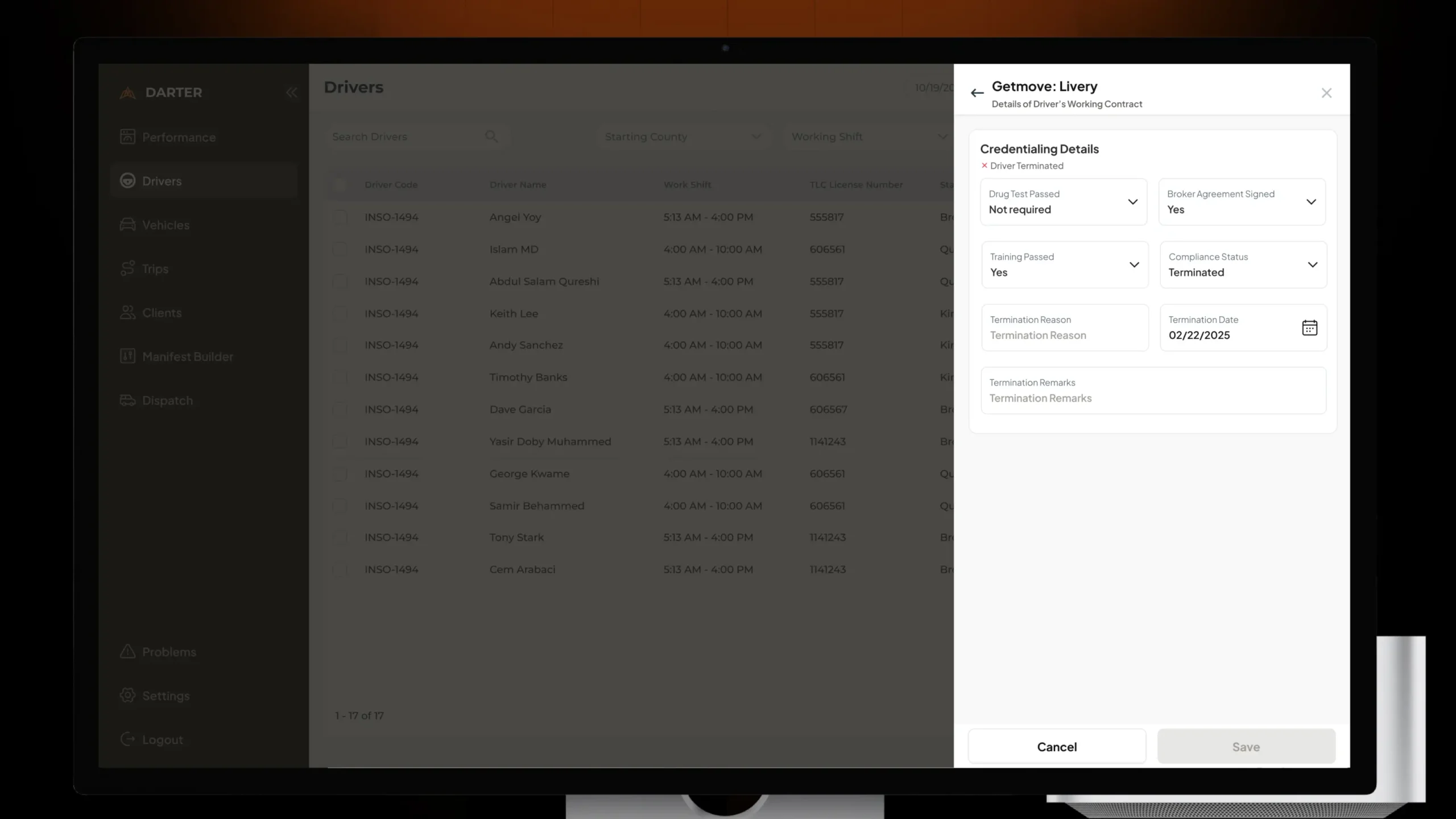
Step 1: Make Sure Your Drivers Meet TLC Requirements
Everything starts with your drivers. If they’re not compliant, your operation isn’t either.
To meet TLC standards, drivers must have:
- A valid TLC Driver License
- A valid NY State driver’s license
- A medical exam certificate (valid for 2 years)
- Completed required background checks
- Annual and/or random drug test
What to focus on:
Don’t just verify this once during onboarding. You need to continuously track expiration dates and renewals. A single expired document can make a driver ineligible to work.
Step 2: Ensure Your Vehicles Are Properly Licensed and Inspected
TLC compliance isn’t just about drivers. Your vehicles need to meet strict requirements too.
This typically includes:
- A valid TLC vehicle license (FHV or taxi license depending on vehicle type)
- Regular inspections and maintenance records, including:
- Yellow taxis: inspected 3 times per year
- Green taxis: inspected every 6 months
- For-hire vehicles (FHV): inspection required for license renewal every 2 years
- Annual NY State vehicle inspection (safety + emissions)
- Proper TLC-compliant insurance coverage, including commercial liability policies
What to focus on:
Vehicle compliance often gets overlooked until there’s an issue. Set up a system to track inspections and insurance renewals so nothing lapses.
Step 3: Keep All Required Documents Organized and Accessible
One of the most common reasons operators fall out of compliance is simple: poor document management.
If your records are scattered across emails, WhatsApp, spreadsheets, and paper files, you’re increasing your risk.
What to do instead:
- Store all driver and vehicle documents in one centralized system
- Keep digital copies that are easy to access during audits
- Include licenses, medical certificates, insurance policies, and inspection reports
- Regularly review for missing or outdated documents
TLC recordkeeping expectations are tied to audit readiness. When everything is in one place and audit ready, compliance becomes easier to maintain and much faster to verify.
Step 4: Track Expirations Before They Become Problems
Most compliance issues don’t come from missing documents. They come from expired ones.
Licenses, medical certificates, and insurance policies all have deadlines. Missing even one can temporarily shut down part of your operation.
What to do:
- Set reminders well before expiration dates
- Build a buffer period for renewals
- Prioritize high-risk items like licenses and insurance
The goal is to fix issues before they affect your ability to operate, not after.
Step 5: Align Dispatching with Compliance Status
Even if your records are in order, compliance can still break at the operational level.
For example, assigning a trip to a driver with an expired document puts you at immediate risk.
What to do:
- Ensure dispatchers can see driver compliance status in real time
- Restrict trip assignments for non-compliant drivers
- Build compliance checks into your dispatch workflow
Compliance shouldn’t live separately from operations. It should be built into how trips are assigned and managed.
Step 6: Prepare for Audits at Any Time
TLC audits aren’t something you can always predict. The safest approach is to be audit-ready at all times.
That means:
- Having all documents organized and accessible
- Being able to generate reports quickly
- Ensuring records are accurate and up to date
What to focus on:
If it would take you hours or days to pull together your compliance records, you’re not audit-ready.
Step 7: Use Technology to Simplify the Process
Trying to manage all of this manually works at a very small scale, but it breaks as you grow.
Spreadsheets and reminders can only go so far before things start slipping.
What to do:
- Use a system that automatically tracks compliance status
- Get alerts for missing or expired documents
- Maintain a real-time view of your entire operation
This is where platforms like Darter make a difference, by bringing compliance and dispatch into one place instead of treating them as separate workflows.
Being TLC compliant isn’t about doing one thing right. It’s about consistently managing multiple moving parts, from drivers and vehicles to documents and dispatching.
The operators who struggle are usually trying to manage this manually or reactively. If you get the structure right, compliance becomes less of a burden and more of a foundation you can rely on as you grow.
Hopefully this guide helps you get ahead before the pressure builds!
But if you’d rather not leave it to chance, start with Darter for free and see how it takes compliance off your plate entirely.