
In NEMT and paratransit operations, your schedule determines everything.
When driver availability doesn’t align with trip demand, the impact is immediate: coverage gaps, missed trips, wasted hours, and frustrated drivers. The longer it goes unaddressed, the more it costs you.
Dynamic driver scheduling solves this by continuously aligning driver shifts with real-time demand, replacing the static, assumption-based scheduling that most operators still rely on.
Built into the Darter platform, this feature is designed specifically for NEMT fleet scheduling, where timing, reliability, and compliance are non-negotiable.
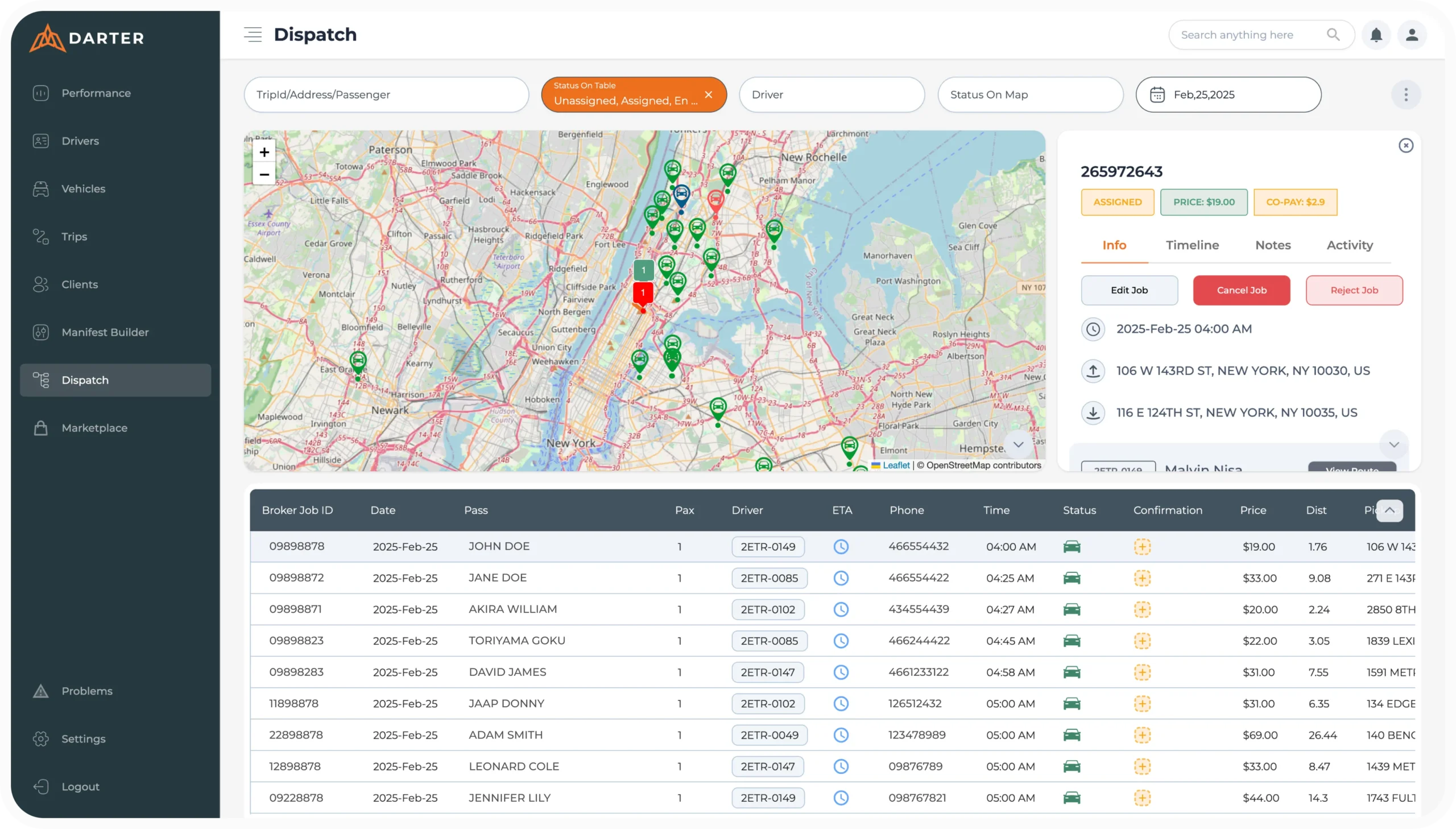
Why Static Scheduling Fails in NEMT Operations
Traditional NEMT dispatch scheduling works on assumptions. Shifts are planned days or weeks in advance based on historical patterns. But real-world trip demand doesn’t follow a script.
Trips fluctuate throughout the day. Last-minute requests come in. Cancellations disrupt routes. A driver calls out sick and suddenly half your morning coverage is gone.
Static schedules can’t absorb any of this without manual intervention. That means your dispatch team spends more time reworking shifts than managing operations.
Every adjustment is reactive. Every reaction costs time, money, and service quality.
What Is Dynamic Driver Scheduling?
Dynamic driver scheduling is automated, real-time shift optimization that adjusts driver allocation based on what’s actually happening on the ground, not what was planned three days ago.
Instead of locking drivers into fixed hours, the system continuously refines who is deployed, where, and when, based on:
- Live and projected trip demand — actual booking data, not estimates
- Driver availability and working hours — including breaks, shift limits, and preferences
- Route efficiency and coverage needs — minimising dead miles and idle time
The result: drivers are where they need to be, when they need to be there, without dispatchers manually rebuilding the schedule every time something changes.
How Does Dynamic Scheduling Reduce Missed Trips?
Missed trips in NEMT operations are rarely caused by a shortage of drivers. They’re caused by drivers being in the wrong place at the wrong time because the schedule didn’t account for how demand actually unfolded.
Dynamic scheduling addresses this directly:
- Demand spikes are detected early — the system identifies surges before they create gaps
- Driver allocation shifts automatically — coverage adjusts without dispatcher intervention
- Cancellations trigger immediate rebalancing — freed-up drivers are reassigned to open trips instantly
For NEMT operators where missed trips can mean denied Medicaid claims or lost broker contracts, this isn’t a convenience feature. It’s revenue protection.
What Does This Mean for Drivers?
Driver retention is one of the biggest challenges in NEMT. A major contributor to turnover is unpredictable, poorly structured schedules that leave drivers either overworked or sitting idle.
Dynamic scheduling improves the driver experience by:
- Reducing idle time — drivers spend more time completing trips and earning
- Balancing workloads — shifts are distributed more evenly across the fleet
- Providing clarity — drivers see optimized schedules through the Darter Driver app that reflect real conditions, not outdated plans
Happier drivers stay longer. Lower turnover means lower recruitment and training costs.
The scheduling improvement pays for itself.
How Does This Help Dispatch Teams?
If your dispatchers are spending most of their day adjusting schedules, they’re not managing your operation. They’re reacting to it.
Dynamic scheduling automates the repetitive workload:
- No more manually reshuffling shifts when demand changes
- No more calling drivers to fill last-minute gaps
- No more building tomorrow’s schedule from scratch every afternoon
Dispatchers shift from schedule management to exception management, focusing on the situations that actually need human judgment.
Why This Matters for NEMT Compliance
In an environment where Medicaid fraud enforcement is intensifying and documentation standards are tightening, scheduling accuracy isn’t just operational. It’s a compliance issue.
When your driver assignments are automated and logged in the system, you maintain a clear audit trail:
- Every trip is linked to a credentialed driver
- Shift records match trip records
- No manual overrides that create documentation gaps
Scheduling is one of the areas most likely to create compliance exposure if managed manually.
Built for NEMT and Paratransit
Dynamic driver scheduling is especially critical in medical transportation and paratransit, where:
- Trips are time-sensitive and appointment-based
- No-shows and cancellations are frequent
- Regulatory requirements demand accurate driver-to-trip documentation
- Service reliability directly impacts broker relationships and contract retention
The feature integrates natively with the Darter platform, so dispatchers and drivers are always working from the same real-time data.
No syncing delays. No version mismatches. No spreadsheets.
Ready to See It in Action?
If your dispatch team is still building schedules manually or your drivers are spending more time idle than on trips, dynamic scheduling is the fix.
If you want to see how it fits into your current setup, talk to our team. We’ll walk through your operation and show you where the gaps are.
— The Darter Team