
Every NEMT operator remembers the email.
The one announcing that the broker handling 60 percent of your trip volume just lost the state contract. Effective in 90 days. New credentialing, new portal, new everything.
If you’ve been in this industry long enough, you’ve lived through some version of it. And over the past year, more operators have been getting that email than at any point in recent memory.
Recent Broker & Network Changes
Over the past year alone, we’ve seen several major shifts across the industry:
- Verida assumed responsibility for all five Georgia regions after replacing Modivcare in multiple regions.
- Colorado began transitioning toward a single statewide broker model under MediDrive.
- SafeRide Health became UnitedHealthcare’s transportation vendor in Texas.
- MTM continued integrating Access2Care following its acquisition.
Viewed individually, these look like routine contract awards. Viewed together, they highlight something transportation providers have known for years:
The organization responsible for most of your trip volume can change.
And when it does, operators often inherit the disruption. The pattern points to a question more operators may want to ask:
How dependent is my business on a single source of trips?
Whether that source is a broker, managed care organization, health plan, transportation network, or facility relationship, concentration risk tends to remain invisible until something changes. A contract changes hands. A region gets reassigned. A network restructures.
An organization that once seemed permanent suddenly isn’t.
The Reality Behind Every Broker Transition
When industry headlines announce a broker transition, the conversation usually focuses on who won and who lost. Operators experience something different.
What Changes for Operators?
The work starts immediately:
- New credentialing requirements
- New onboarding processes
- New reporting standards
- New billing workflows
- New dispatch systems
A provider that was fully approved and actively completing trips yesterday may suddenly need to re-submit documentation, update credentials, and learn workflows in a completely different network structure.
Every broker has different onboarding requirements, and driver records, vehicle inspections, insurance documents, certifications, and compliance paperwork often need to be submitted again even when nothing about the operator itself has changed.
Many providers experienced exactly that when regions shifted from Modivcare to Verida.
The trips don’t necessarily disappear, but accessing them often requires operators to re-enter a new ecosystem. For smaller transportation providers especially, these transitions can create administrative burdens that last weeks or months.
The operational challenge isn’t simply learning a new process. It’s maintaining service levels while the system around you changes.
What Actually Happens When Your Primary Broker Changes
For most operators, one of four things happens.
- You successfully transition: You complete the new credentialing requirements, onboard into the new network, and continue receiving trips with minimal interruption.
- You experience temporary disruption: Trips continue flowing, but onboarding delays, documentation requirements, payment transitions, or new workflow requirements create operational friction that can last weeks or even months.
- You lose volume: Not every operator is automatically approved into a replacement network. Some providers lose access to trips they previously serviced and must find alternative sources of demand to replace that volume.
- You discover how concentrated your revenue really is: A broker transition often exposes how dependent an operation has become on a single source of trips. What felt like a stable relationship suddenly becomes a business continuity issue.
Which scenario applies depends almost entirely on how an operation was structured before the transition started.
New York Operators Have Already Seen This
For many operators outside New York, these transitions may feel new. For New York providers, they probably sound familiar.
When Medical Answering Services (MAS) became New York’s statewide Medicaid transportation manager, providers across the state had to adapt to new requirements, new compliance standards, GPS reporting rules, and operational procedures that often required rebuilding internal workflows from scratch.
What Successful Operators Had in Common
The providers that adapted most successfully weren’t necessarily the largest fleets.
They were operators with:
- Organized documentation
- Centralized operational processes
- Strong compliance workflows
- Systems that could adapt without being rebuilt
As long as your operations have these already in place, then you’re already ahead.
It’s more than just Medicaid.
Most transportation providers today don’t rely on just one type of trip.
Many fleets operate across:
- Medicaid transportation
- Managed care organizations
- Medicare Advantage plans
- Facility relationships
- Broker networks
- Commercial health plans
- Private-pay opportunities
This is especially relevant now because Medicare Advantage is going through its own pressure point. The share of Medicare Advantage plans offering transportation benefits dropped from 30 percent in 2025 to 24 percent in 2026, and several major carriers are exiting markets entirely. Operators who diversified into Medicare Advantage as a hedge against Medicaid broker volatility are finding both legs of that stool weakening at the same time.
Whenever a large percentage of revenue originates from a single organization, operators become exposed to decisions they don’t control. A broker can lose a contract. A health plan can change vendors. A network can adjust participation requirements. A facility can consolidate providers.
For operators tracking the broader compliance environment, we’ve covered related dynamics in our analysis of federal Medicaid revalidation orders and the Minnesota enforcement actions that preceded the current round of state-level restructuring.
Single-Source Trip Dependence Is Becoming Riskier
As broker contracts change and trip volume shifts between organizations, operators may benefit from thinking beyond any single source of demand.
The ability to participate across multiple networks, trip sources, and transportation programs creates resilience when the market changes, whether those changes come from contract awards, broker transitions, or entirely new transportation models.
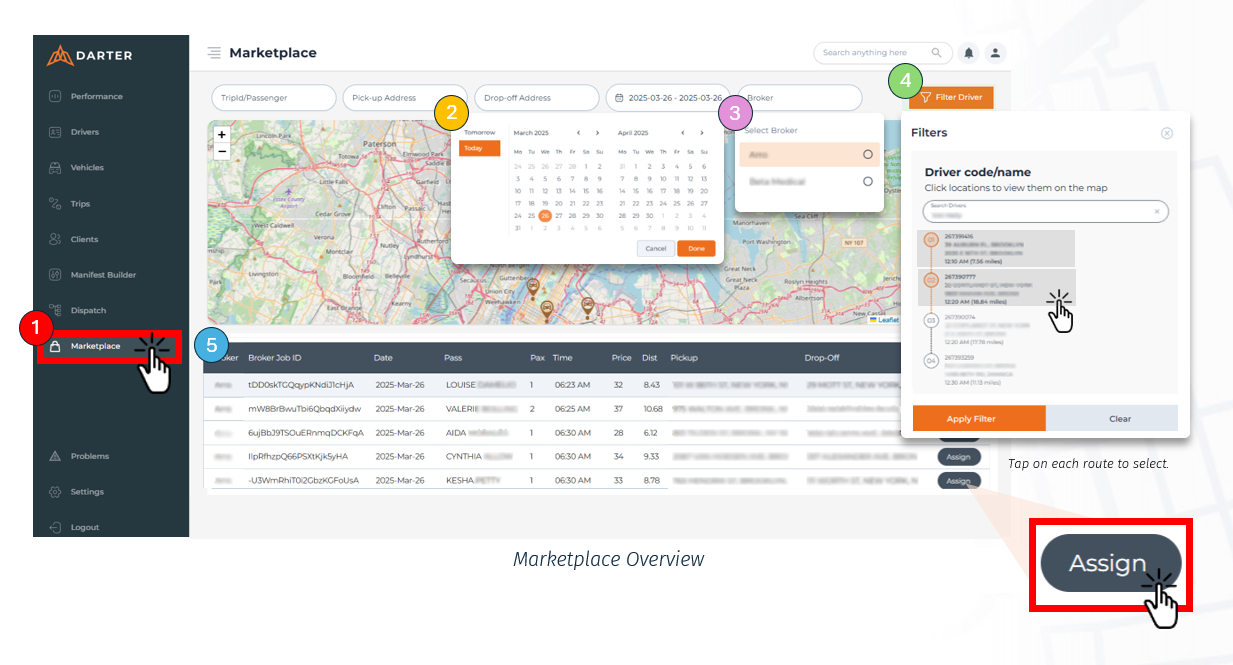
It’s part of why the industry is moving toward more connected transportation ecosystems like Trip Xchange where operators can access additional trip opportunities, brokers can find qualified capacity more efficiently, drivers gain access to more work, and trips get fulfilled more reliably across the network.
If This Is Happening to You Now
Most transportation providers work hard to reduce operational risk. They diversify drivers, maintain backup vehicles, invest in compliance programs, and improve dispatch and routing technology.
But far fewer operators actively measure revenue concentration risk.
A Quick Self-Assessment
- What percentage of your trips come from a single broker?
- If one organization disappeared tomorrow, what percentage of revenue would be affected?
- How quickly can your team onboard into a new network?
- Would re-credentialing drivers and vehicles take days, weeks, or months?
- Could you immediately provide insurance records, vehicle inspections, driver credentials, and compliance documentation if a new network required them?
For many operators, the answer is uncomfortable. A significant portion of trip volume often originates from a single source. And while that may not feel risky during stable periods, recent broker transitions are a reminder that stability isn’t guaranteed.
Because when the organization responsible for most of your trip volume changes, the goal isn’t to rebuild your operation. It’s to keep moving.
The fleets that survive the next broker transition won’t be the biggest. They’ll be the ones that built optionality before they needed it. You should know where you stand.