
For most of the past year, the conversation in NEMT has centered around compliance.
CMS revalidation orders. Minnesota’s enforcement campaign. Multi-state fraud investigations. Increasing broker scrutiny around documentation and oversight.
Transportation providers have spent months preparing for audits, tightening operational processes, and improving compliance readiness. And for operators that haven’t, the pressure is only growing.
But another challenge has been building underneath the regulatory conversation, and the warning signs are becoming much harder to ignore.
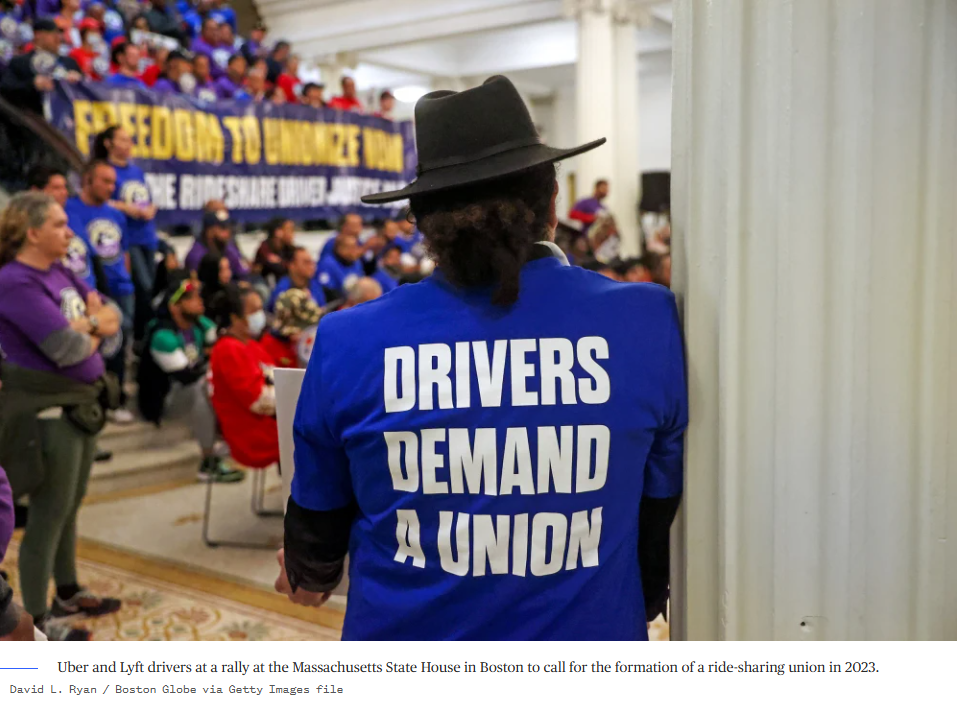
On May 22, 2026, Massachusetts became the first U.S. state to officially recognize a union of rideshare drivers while still keeping them classified as independent contractors.
The newly formed App Drivers Union now represents roughly 70,000 Uber and Lyft drivers across the state.
At first glance, this sounds like a rideshare story.
But for transportation operators, especially in NEMT, it signals something much bigger: Driver expectations are changing faster than many operational systems are adapting.
The Real Bottleneck in Transportation
Most fleets already understand how difficult it is to replace a reliable driver.
Recruiting, screening, credentialing, drug testing, broker paperwork, compliance checks, onboarding, and scheduling setup can take weeks before a driver completes a single trip.
And while many operators treat that process as normal operational overhead, the downstream impact is much larger than it appears.
When a driver leaves:
- trips get redistributed or refused
- coverage gaps grow
- dispatch pressure increases
- broker confidence weakens
- operational consistency starts slipping
The cost is rarely isolated to one driver. It spreads across the operation.
For years, transportation performance was measured through:
- on-time percentages
- miles per trip
- dispatch speed
- route efficiency
Now, driver experience is becoming part of the same conversation.
Drivers Are Comparing Platforms More Than Ever
The Massachusetts certification matters less because of unionization itself and more because of what it reflects underneath: Drivers compare systems.
As transportation becomes more digital, drivers naturally compare onboarding speed, communication quality, payout visibility, flexibility, and workflow friction across every platform they use and those expectations travel with them.
A driver running NEMT trips during the day may also drive rideshare at night. A driver onboarding with one operator may compare that process against another platform they joined last month. That means operational standards are no longer isolated within individual fleets.
They are increasingly shaped by the broader transportation ecosystem.
And expectations are shifting toward:
- faster onboarding
- clearer payout visibility
- less fragmented communication
- easier trip access
- more flexible scheduling
Operators slow to adapt to those expectations may begin feeling the pressure first through retention, trip fulfillment, and coverage consistency.
Why New York Matters
These shifts become even more important in New York.
The state already operates under some of the country’s most aggressive transportation oversight. More than 80,000 active for-hire vehicle drivers are licensed through the TLC alone, alongside growing scrutiny across Medicaid transportation programs and broker accountability standards.
That creates a unique operational environment where fleets are balancing:
- compliance requirements
- staffing pressure
- broker expectations
- trip reliability
- operational scalability
Massachusetts may be the first state to formalize this shift publicly.
But New York may be one of the first places where the operational effects become visible at scale. Not necessarily through regulation first, but through driver behavior.
Where The Operational Impact Usually Appears First
The fleets most exposed are often the ones still managing driver workflows the same way they did five years ago.
- Manual onboarding.
- Fragmented communication across calls, texts, spreadsheets, and paperwork.
- Limited visibility into payouts.
- Trip updates handled manually instead of through structured workflows.
These systems may still function operationally. But as driver expectations continue rising, friction becomes easier to notice and harder to tolerate. And the operational impact usually appears before operators realize it.
Trip Acceptance Rates
Drivers facing high-friction workflows often become more selective about the trips they accept. Over time, acceptance consistency starts declining.
Time-To-First-Trip
Long onboarding timelines increase the likelihood of losing drivers before they ever become operational.
Broker Performance Metrics
Coverage gaps, slower response times, and fulfillment inconsistency eventually show up in broker scorecards and operational reporting.
These issues are often treated as staffing problems or market conditions.
In reality, many of them are workflow problems.
Driver Experience Is Becoming Part of Operations.
Historically, driver experience sat separately from operations. Dispatch focused on trips. HR focused on drivers. With this shift, the fleets best positioned over the next few years likely won’t just be the ones with the fastest routing or the lowest mileage costs.
They’ll be the operators reducing friction across the entire driver workflow:
- faster onboarding
- centralized communication
- clearer payout visibility
- streamlined dispatch coordination
- simpler daily workflowsThese improvements may not immediately increase revenue, but they help prevent the kind of gradual operational instability that becomes much harder to reverse later.
Massachusetts may be one state, but the driver expectations behind that certification are already spreading across transportation.
And for drivers, this shift may finally signal something long overdue: driver experience becoming a real operational priority across the industry.
And that’s how driver experience just became a major operational metric in NEMT.