

Introduction
A NEMT software implementation takes 4 to 10 weeks for most fleets, not the one week a sales demo suggests. If you are still choosing a platform, start with a software comparison and come back to this. A 5-van operation on private pay can be live in a fortnight. A 25-van fleet with three brokers and Medicaid billing should plan for two months, and should expect to run the old system alongside the new one for part of it.
The software itself is rarely what takes the time. Your data, your broker connections and your billing are, and those are mostly on your side of the fence. This guide walks the phases in order and names the places projects stall, before you even get to a software comparison.
What Slows a NEMT Software Implementation Down?
Vendors quote setup time for their own work. Your side of a NEMT software implementation is the larger half, and nobody quotes for it.
Four things dominate:
- Cleaning up rider, driver and vehicle records before they move
- Getting broker connections live and tested with real trips
- Getting every driver onto the app and actually using it
- Moving billing without dropping a claim
None of those is a software problem. All four are the reason a two-week promise becomes six weeks in practice.
Work out who owns each one before you start. On a small fleet that is probably you and one dispatcher, and saying so out loud prevents the drift that kills timelines.
Phase One: Get Your Data Ready
This is week one, and skipping it is the single most common cause of a stalled NEMT software implementation.
What You Are Moving?
Rider records with addresses and phone numbers. Vehicle records with capability and securement positions. Driver records with licence and certification dates. Standing orders with their recurrence patterns. Broker and payer details.
Clean It Before It Moves
Bad data in a spreadsheet is annoying. Bad data in a dispatch system sends a van to an old address, and the driver finds out at the door.
Deduplicate riders. Fix addresses that never quite worked. Remove drivers who left. Confirm which vehicles are actually in service. This is dull work and it is cheaper now than after go-live.
Standing orders deserve their own pass. A recurring dialysis run that imports with the wrong day pattern generates missed trips for weeks, and nobody notices until a patient calls.
Export your current records early, even if you are not switching yet. Seeing what the data actually looks like usually shortens the NEMT software implementation more than any other single step.
Phase Two: Broker Connections
This is the phase most likely to overrun, because it depends on a third party who does not work to your timeline.
Each broker connection needs credentials, a technical link and a test cycle with live trips. Start requesting those credentials on day one, because they often take longer to arrive than the technical work takes to finish. Ask two questions before you start: which of your brokers does the vendor already connect to, and who owns the connection when it breaks.
Expect the first import to surface data problems rather than work cleanly. Trips that fail to map, addresses the system cannot resolve, trip types that do not match your vehicle list. That is the point of testing, and it is why the NEMT software implementation plan should allow two weeks here rather than two days.
Keep pulling trips from the broker portal by hand until the connection has run clean for a full week of real trips. Parallel running is not a lack of confidence, it is how you avoid losing a day of trips.
Phase Three: The Driver App
Drivers decide whether a NEMT software implementation succeeds, and they are usually consulted last.
Give them a reason to care. An app that shows a clean run and removes the phone calls asking where they are is an easier sell than one presented as a new requirement from the office.
Roll out in stages rather than all at once. Start with two or three drivers who are comfortable with technology, let them run a full week, then bring the rest across with those drivers helping.
Three practical points:
- Check the app on the phones your drivers actually own
- Test what happens in areas with no signal
- Decide who pays for data, and settle it before go-live
An app drivers dislike gets worked around, and a worked-around app produces incomplete trip records. That shows up later in driver experience and in your claim denials at the same time.
Phase Four: Billing Cutover
This is the phase where a NEMT software implementation can cost you money rather than time, so it deserves the most care.
Billing is the phase with real money attached, so it moves last and carefully.
The rule is simple. Finish the current billing cycle in the old system, then start the next one in the new system. Do not split a cycle across both. Reconciling half a month in two systems costs more than waiting a fortnight.
Broker deadlines are unforgiving here. One published state provider manual gives providers 90 days from the date of service to submit invoices, applies a 10% reduction after that, and disallows claims entirely after 180 days. A billing cutover that drops a batch is not a paperwork problem, it is lost revenue.
Run your first new-system claim batch small, confirm it was accepted, then scale up.
Keep read-only access to the old system for at least a quarter. Denials and queries arrive weeks after the trip, and you will need the original record to answer them.
Phase Five: Parallel Running
For one to two weeks, run both systems. Yes, it is double work. It is also the cheapest insurance in the project.
What parallel running catches: trips that imported into one system and not the other, timestamps that do not match, standing orders that drifted, reports that disagree.
Compare the two at the end of each day rather than at the end of the week. A one-day gap is a question, and a five-day gap is an investigation.
Set a clear end point before you start, such as five consecutive clean days. Without one, parallel running becomes permanent and your dispatchers end up maintaining two systems indefinitely.
Tell your team what the end point is, too. People work differently when they know a double-entry week has a finish line.
When you hit it, turn the old system off for daily use on a set date and say so in writing. A half-retired system is the one people quietly keep using.
A Realistic Timeline by Fleet Size
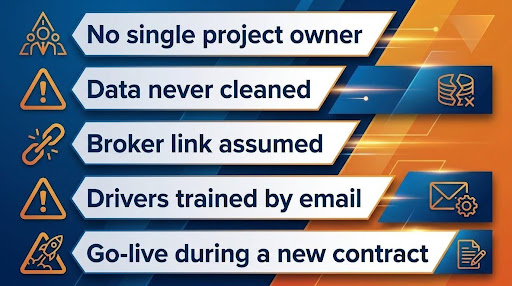
Five failure points account for most overruns, and four of them are avoidable.
- Nobody owns the project, so decisions wait for a meeting
- Data was never cleaned, so problems surface after go-live
- A broker connection was assumed rather than confirmed
- Drivers were trained once, by email
- Go-live was scheduled in the same week as a new contract
That last one is worth repeating. Absorbing new volume and learning a new system at the same time guarantees both go badly. Pick a quiet stretch, even if it means waiting a month.
Avoid the weeks either side of a holiday as well. A NEMT software implementation needs your broker contacts, your vendor and your own staff all reachable on the same days.
What to Ask a Vendor Before You Sign?
Five questions that separate a real plan from a sales promise.
- Who moves my data, and in what format do you need it?
- Which of my brokers are already connected, and who fixes a broken link?
- How long does driver app rollout take for my fleet size?
- Can I run both systems in parallel, and for how long?
- Who is my named contact during setup, and after?
Get the answers in writing. A vendor with a real onboarding process answers these quickly, and one without a plan will talk about features instead.
Ask for a reference too, ideally a customer of your size who went live in the last six months. They remember what the NEMT software implementation actually felt like rather than what the plan said.
Measure Your Real Fleet Utilization
Calculator Download Form
Plan the Implementation, Not Just the Purchase
Most owners spend weeks choosing a platform and an afternoon planning the switch. The choice matters, but a good platform badly implemented still produces missed trips and denied claims.
Budget 4 to 10 weeks depending on your size, pick a quiet period, name one person to own it, and clean your data before anything moves. That is most of what separates a smooth NEMT software implementation from a painful one, and none of it depends on which platform you chose.
Then compare platforms properly on the things that matter after go-live, using the method in our software comparison guide.
If you want to see how the phases work on your own fleet, start a free trial of Darter and run a real week through it before you commit.